
An 1880s Farmhouse Backed by 50 Acres of Protected Open Land
$599,000 Ripe for Reimagining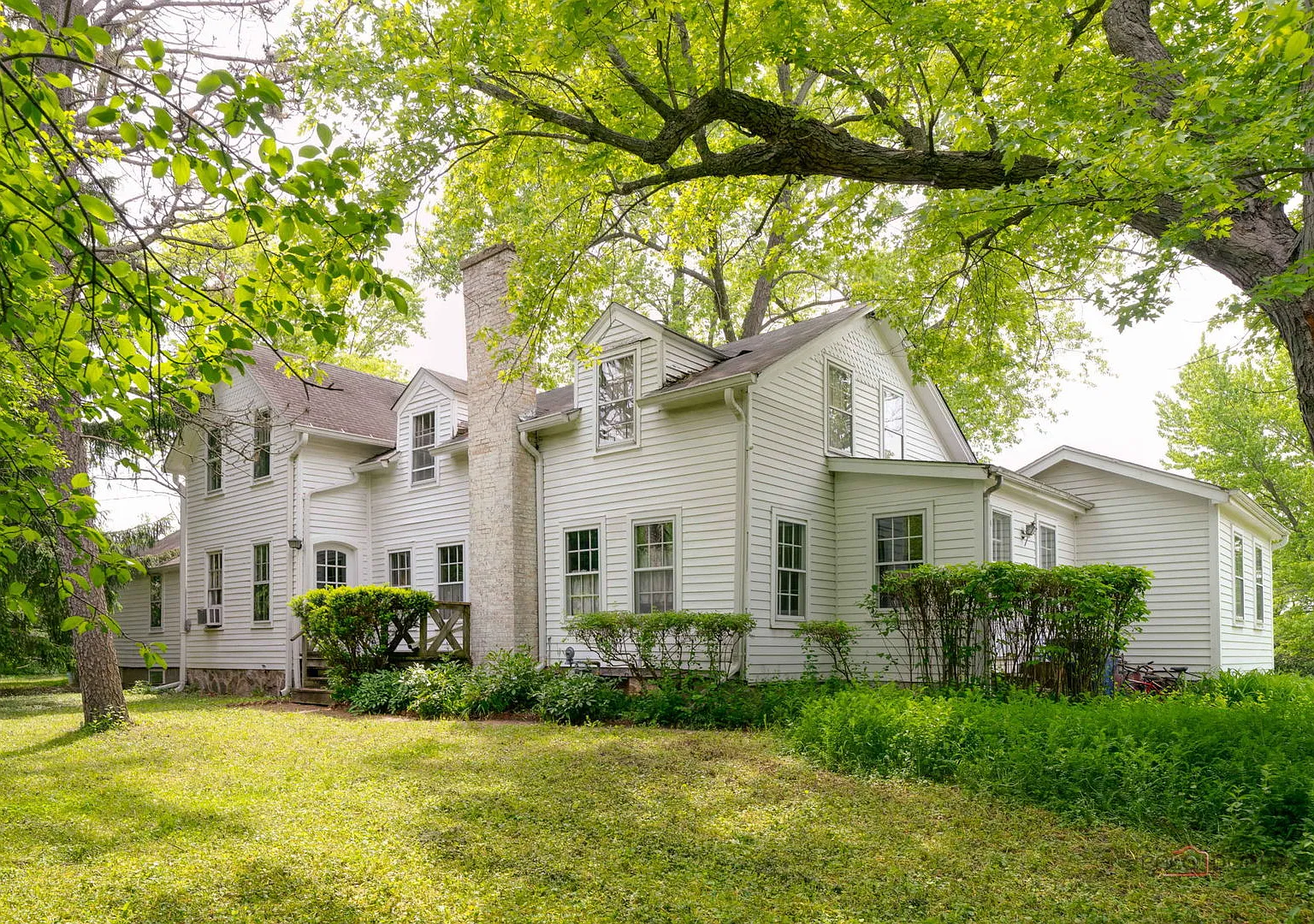
In Libertyville, in Lake County — 5 acres of Illinois land, part protected forever by a conservation easement.
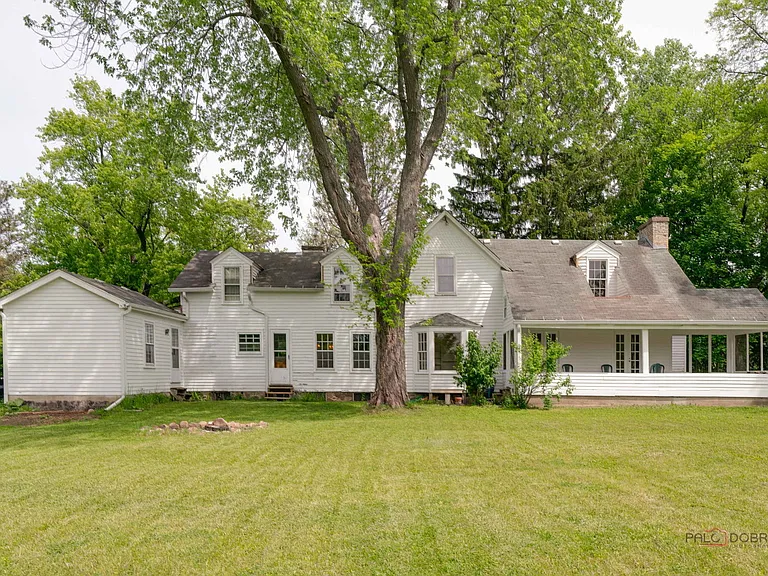
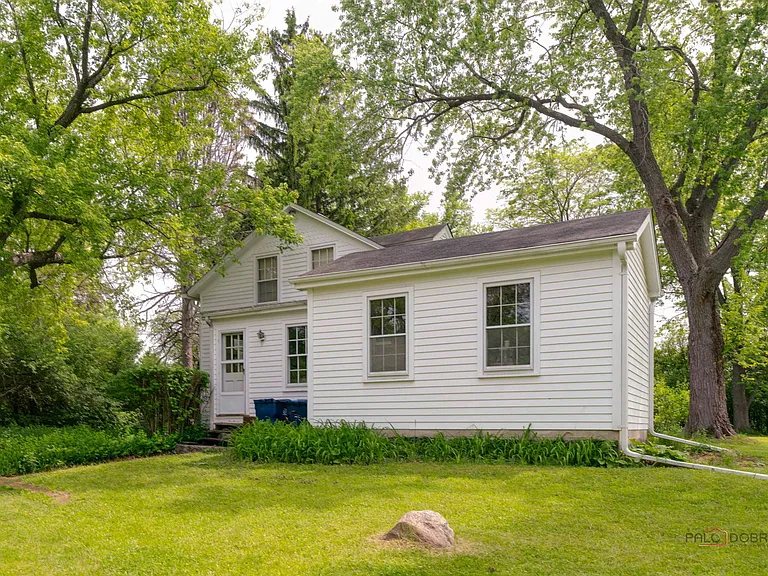
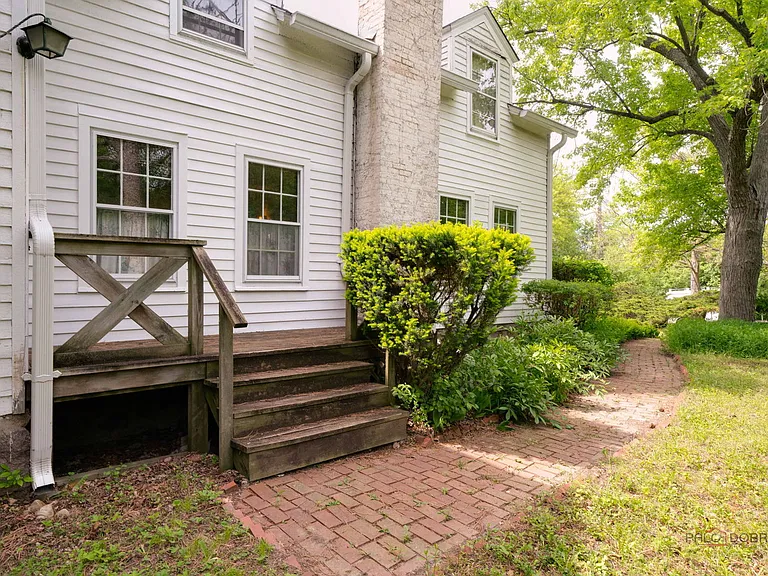
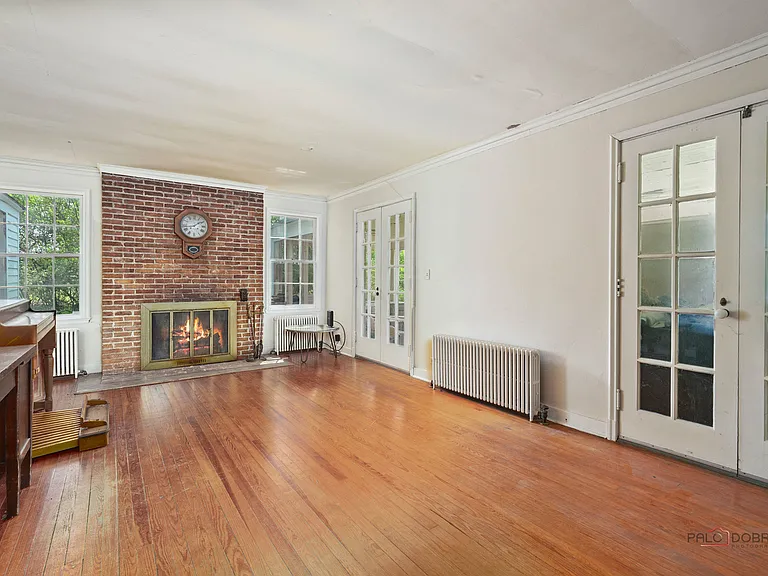
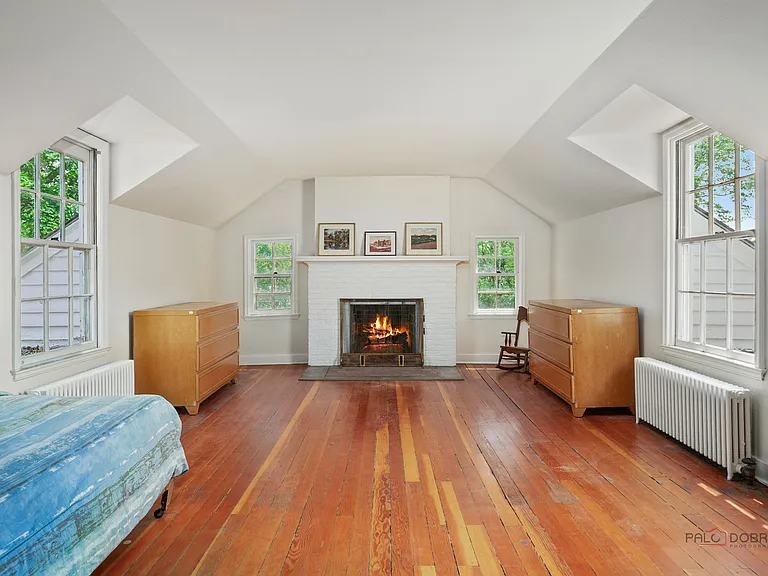
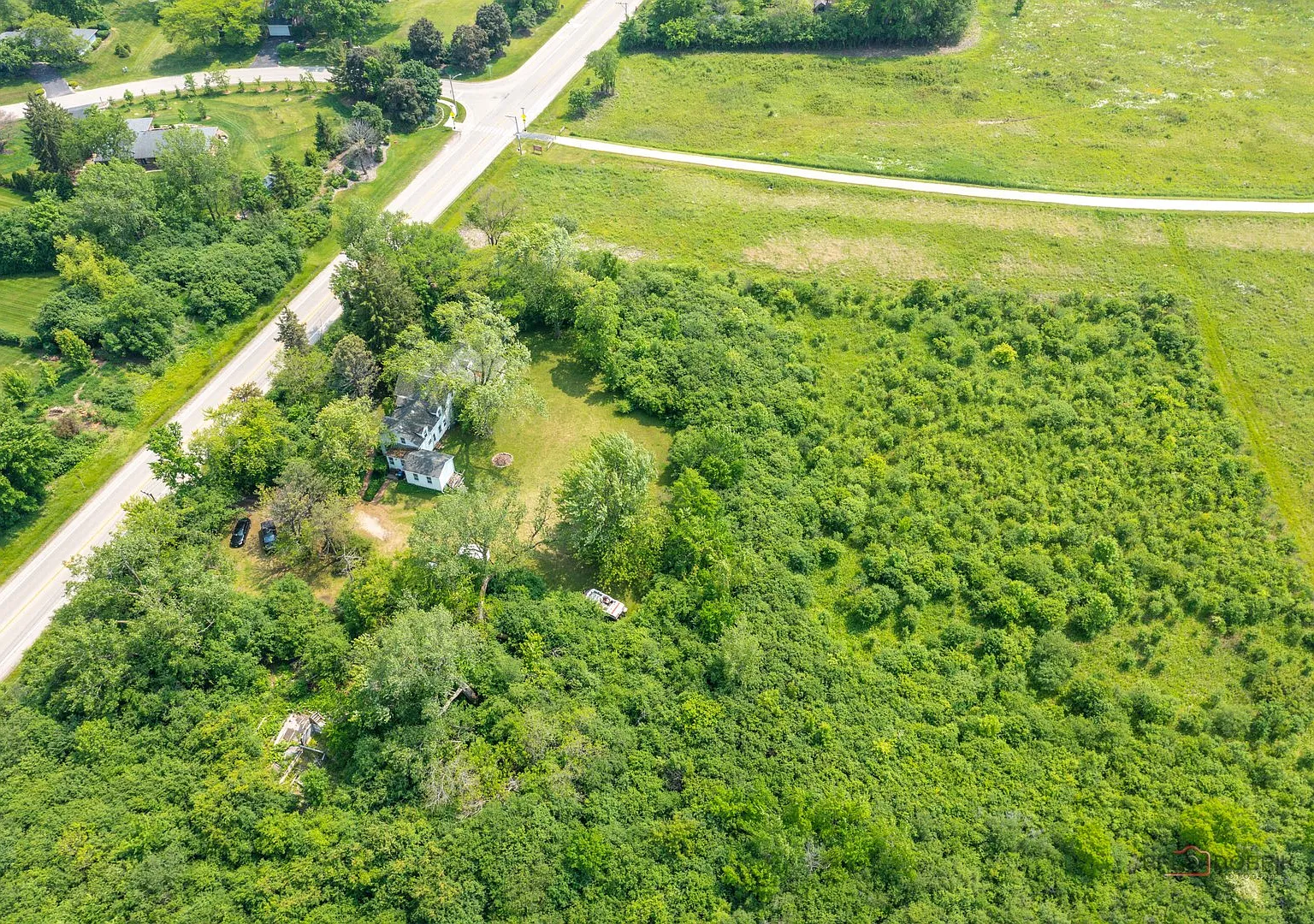
The house itself dates to 1880, with the kind of wide-plank floors, brick fireplace, and multi-pane windows that don't get built anymore — though extensive recent foundation work means the bones underneath are far newer than the year built suggests. Three of the five acres sit inside a permanent conservation easement, so no structures can ever go up back there, but the front two acres and the Rural Estate zoning leave room to build the barn and 3-4 car garage the current owners have only sketched out, on the site of a prior dairy barn. 5 bd / 3 ba, 3,400 sq ft, built 1880, on 5 acres.
Listed at $599,000, down $50,000 from its original price. Listing courtesy of Anne Stromayer, Berkshire Hathaway-Chicago.
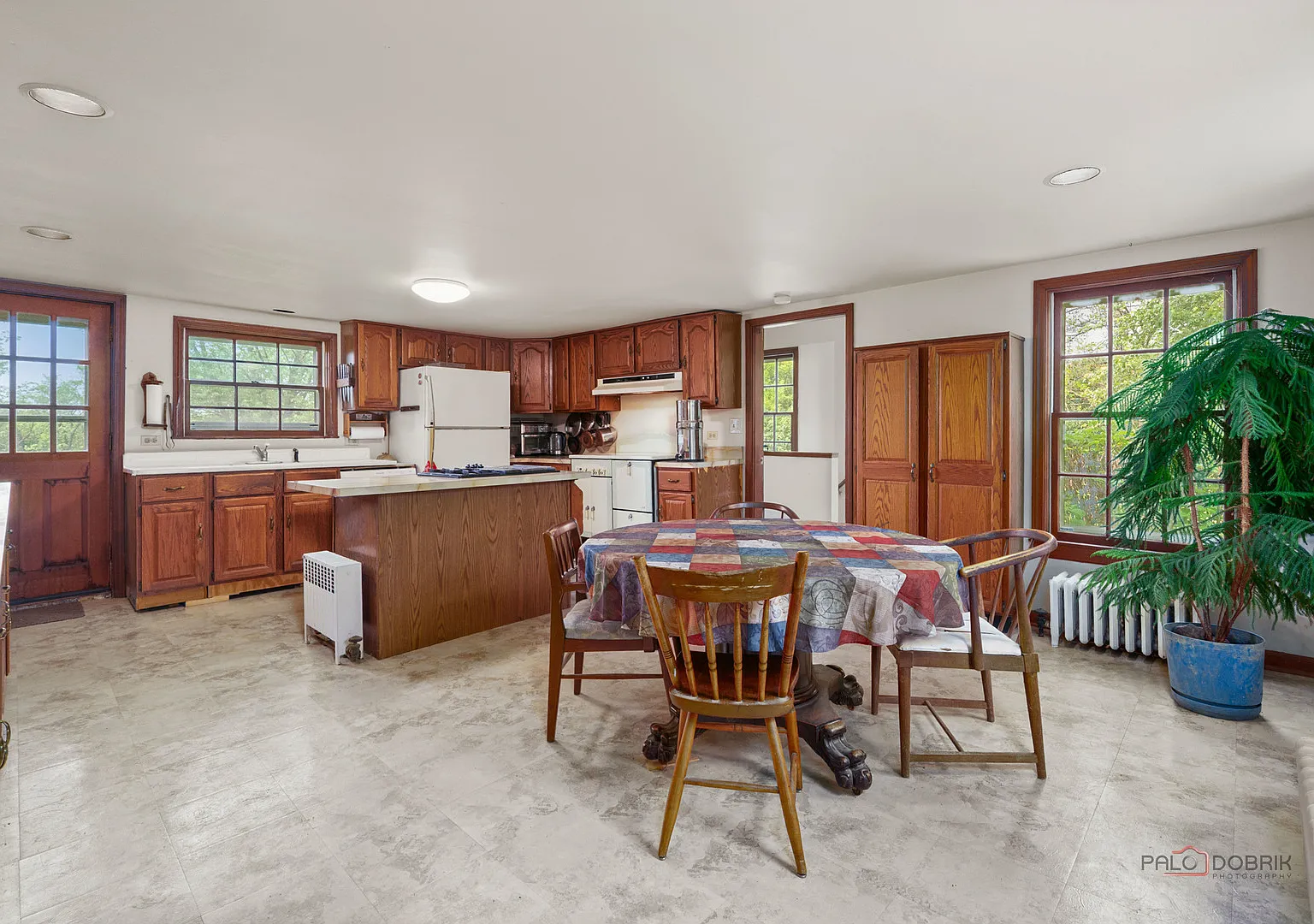
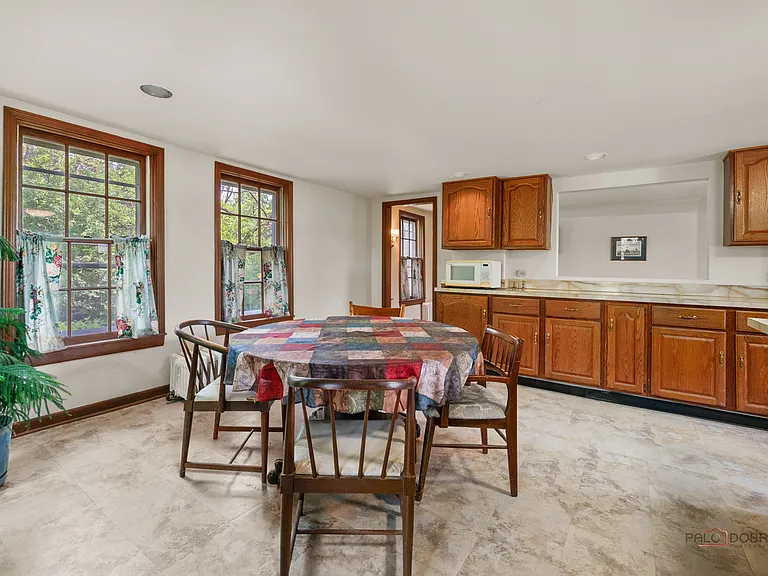
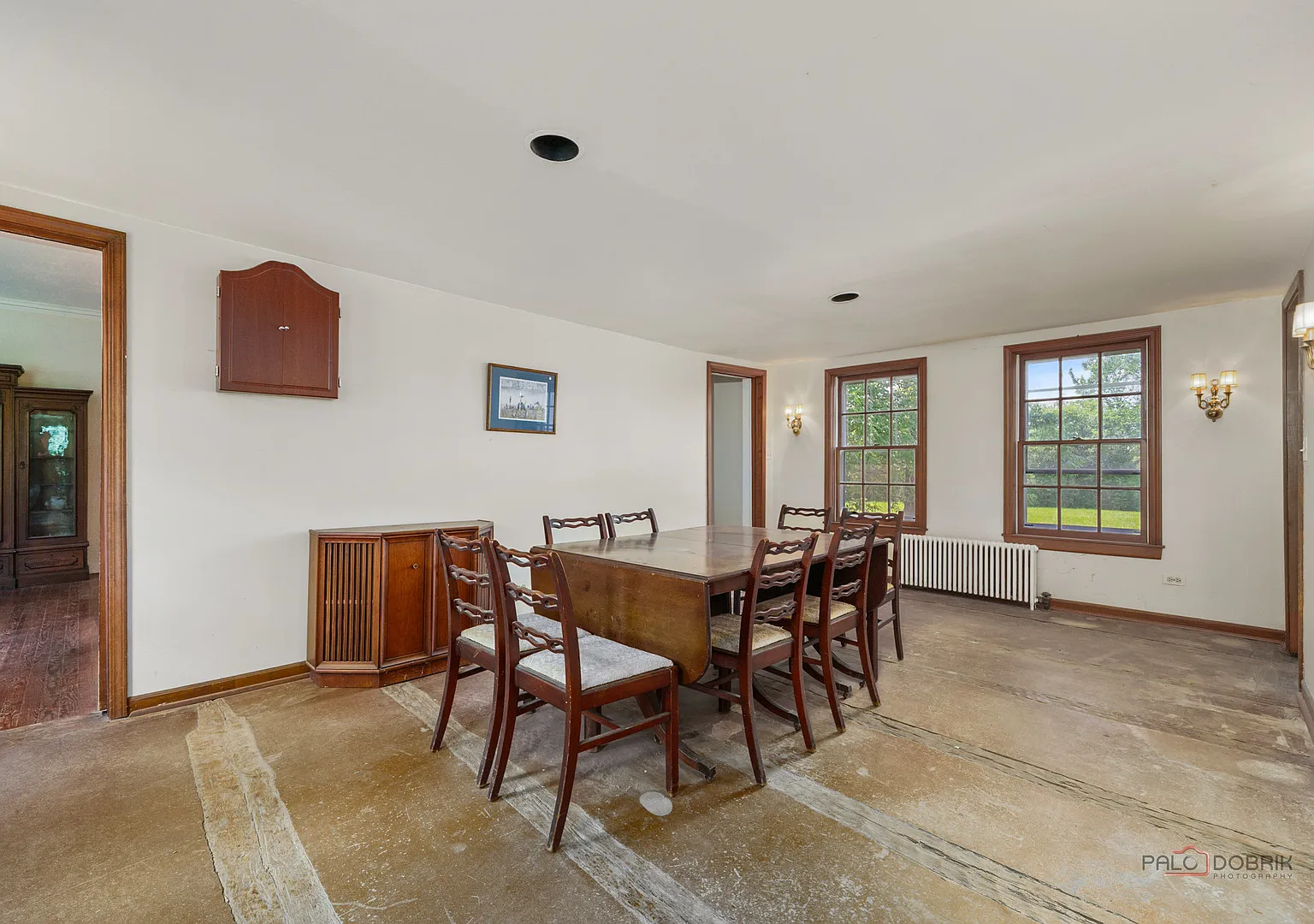
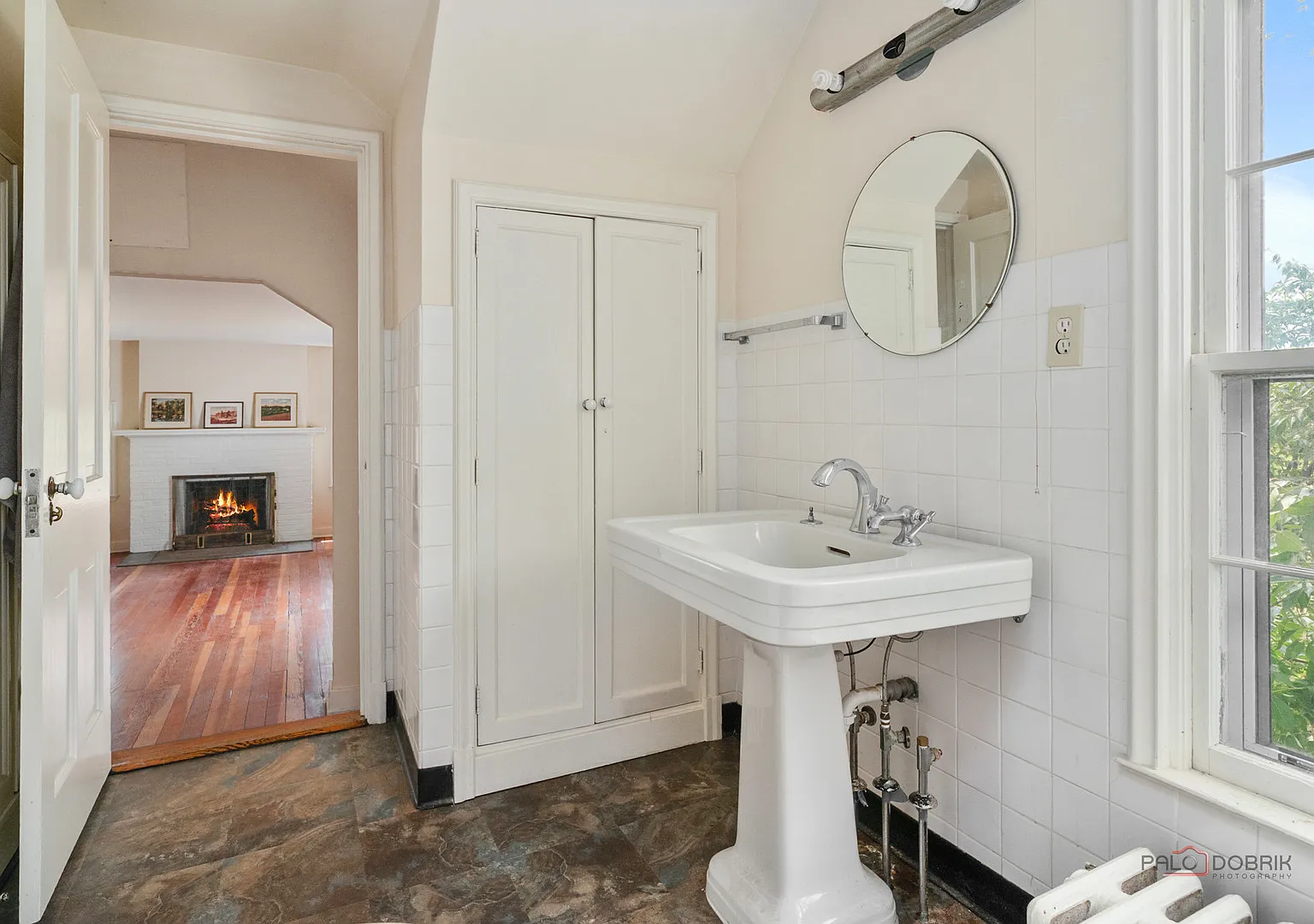
Sold as-is, and the interior still wears its last real update from decades ago — worn carpet, dated kitchen cabinetry, no garage at all yet. This is a house for someone who wants the shell of something old and honestly built, with land insulated from development, more than someone looking for a place to move in and not touch a thing.
Homestead Potential
Water & Infrastructure
The listing doesn't specify well or septic details, which is common on an older, continuously-occupied property rather than a red flag on its own — a functioning system is almost certain given the home has been lived in this whole time, but get the well output and septic age confirmed as part of any offer here, not left to assumption. Lake County sits atop the Silurian dolomite aquifer that supplies much of the Chicago exurbs, generally a reliable source for a private well at this scale. Worth asking directly whether the extensive foundation work mentioned in the listing touched the water or septic lines, since foundation work sometimes forces those systems to be redone at the same time. Given the property has stood since 1880 without documented water issues serious enough to derail past use, there's no obvious red flag here — just gaps in the disclosure worth closing before closing.
Crop & Income Potential
Lake County's soil is a product of the Valparaiso Moraine, glacial till left behind roughly 15,000 years ago — good drainage, workable ground, but not the flat black prairie loam that makes central and southern Illinois some of the most productive farm ground in the country. At 5 acres total, with 3 of those permanently protected from any development under the conservation easement, this was never going to be a row-crop operation regardless of soil quality — the buildable footprint suits a serious home garden or small orchard, not acreage to farm at scale. The listing's own reference to a prior dairy barn on the property is a real echo of Lake County's agricultural past, when small dairy operations like this one were common across the county before Chicago's suburbs pushed north. Today, that history reads more as character than opportunity — the land supports a real garden and maybe a few animals, not a working farm.
Sustainability
Extensive foundation work already completed removes one of the biggest, most expensive unknowns an 1880s house usually carries into a sale — that's real money already spent that a buyer doesn't have to worry about inheriting. Beyond that, this is a property with more potential than infrastructure: no garage exists yet, and the barn the listing describes is aspirational, sited where a prior dairy barn once stood rather than standing today. Whoever buys this is signing up to build the self-sufficiency systems here — a garage, a barn, whatever growing setup they want — largely from scratch, on roughly two usable acres outside the easement. That's a real project, not a move-in-ready homestead, and the price reflects exactly that.
The Boundaries
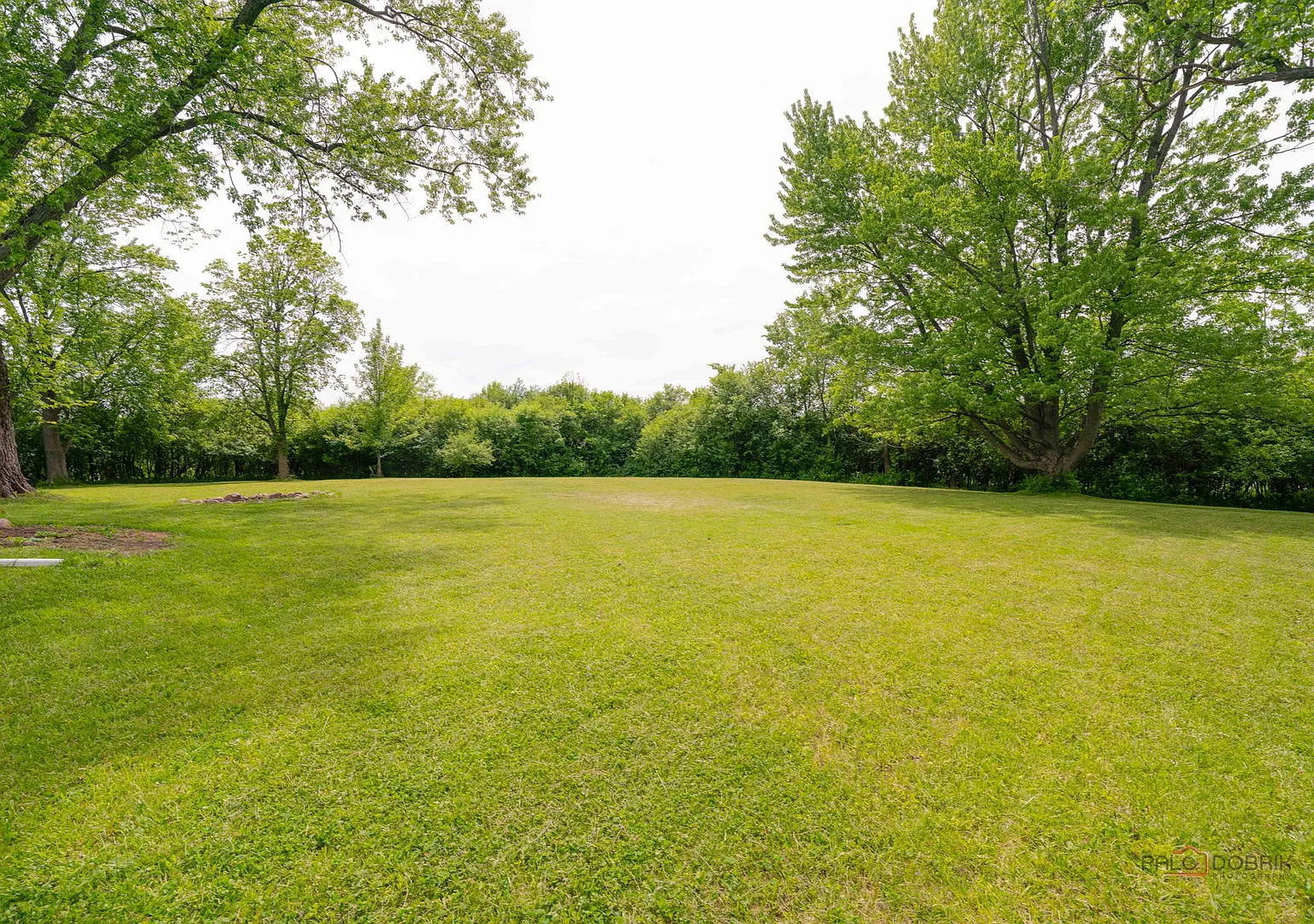
The back three of the five acres are under a permanent conservation easement — no structures can ever be built there, and the property cannot be subdivided, both facts worth understanding fully before making an offer, since they cap what this land can ever become no matter who owns it next. That same easement is also the guarantee that the view out the back window never changes, bordered by 50 acres of Libertyville Open Lands managed as protected space. Zoning is Rural Estate (RE), which is what allows the detached garage and barn the listing describes, but confirm Lake County's specific setback and easement-boundary rules before finalizing where anything gets built. A current survey is worth the cost here specifically because the easement line, not just the property line, needs to be unambiguous before any construction plan gets drawn up.
Beyond the Property Line
Local Flavor & Small-Town Character
Libertyville is one of the more historic villages in Lake County, with a downtown built around the restored Cook Memorial Park District campus and a Main Street lined with buildings dating back over a century — Marlon Brando and Adlai Stevenson both have ties to the town's past, one of the small-town-with-real-history claims Libertyville likes to make. Libertyville Days, the village's long-running summer festival, draws crowds downtown every July with a carnival, live music, and a parade that's been a local fixture for decades. The Des Plaines River runs along the broader Libertyville area, and downtown sits an easy, walkable distance from this property despite its rural feel. For a place this close to the Chicago exurbs, it manages an unusually intact small-town center rather than the strip-mall sprawl common elsewhere in Lake County.
Agricultural Resources & Neighbor Networks
University of Illinois Extension's Lake County office, based in Grayslake, serves growers throughout this part of the county with soil testing and gardening guidance suited to the area's moraine-influenced ground. Lake County's agricultural history is thinner than the state's central prairie counties, but small operations like the dairy barn once on this property were common here well into the 20th century, and a handful of hobby farms and equestrian properties still dot the Rural Estate-zoned parcels nearby. Prairie Crossing, a well-known conservation-focused farm community in neighboring Grayslake, is a short drive away and a useful reference point for what this area's small-scale agricultural character can look like when deliberately preserved. Feed and farm-supply needs are a short drive into Grayslake or Mundelein, both of which still serve the county's remaining rural properties.
Outdoor Recreation & Natural Surroundings
The 50 acres of Libertyville Open Lands directly behind the property are part of the Lake County Forest Preserve District's holdings, which manage tens of thousands of acres of protected land and trails across the county. Independence Grove, one of the district's flagship preserves with a 115-acre lake for fishing and paddling, sits a short drive from this address. The Des Plaines River Trail, a paved multi-use path that runs the length of the county along the river, is accessible from multiple points near Libertyville for cycling and walking. Between the easement-protected acreage out back and the broader forest preserve network, this is a property where the undeveloped land outlasts anything a future owner decides to build.
Both scores land low here, but for different reasons: the farmstead side because a conservation easement permanently protects three of the five acres from ever holding a barn or a crop row, not because the land itself is poor; the homestead side because everything you'd want confirmed — a well, a septic system, a growing setup — is simply absent from the listing, not necessarily absent from the property. What's actually being sold here isn't infrastructure at all, it's permanence: a guarantee, backed by fifty more protected acres next door, that this view doesn't change. That's a real thing to pay for, but it's a different purchase than either a working farm or a ready-made homestead, and the listing's own "explore all the possibilities" framing undersells how much of that possibility is still entirely on paper.
— Your Pastures & Porches Team
Listed on Zillow
Pastures & Porches is not a real estate agency and does not represent any property or agency. Pastures & Porches is an informational blog based on our own point of view. All properties are subject to prior sale, change or withdrawal. Pastures & Porches is not responsible for any misinformation, including but not limited to price, status or condition. All information shared by Pastures & Porches must be independently verified. Comments and opinions posted by Pastures & Porches does not represent the listing, property owners or agents.
Links to other websites:
Pastures & Porches includes links from other websites. These sites have separate and independent privacy policies. Pastures & Porches does not guarantee and have no liability for their content, information and privacy policies when accessed via our website’s link.
Google Advertising provides a positive experience for users. Google AdSense Advertising is placed on our website in order to place ads regarding users’ historical visits on our and other websites. Data is collected and used for advertising purposes. Find more about Google AdSense privacy policy on the link https://support.google.com/adsense/answer/1348695?hl=en
We analyze data via Google Analytics. Cookies are used as a way of gathering information in order to create reports. It’s a matter of your own choice to accept or decline cookies when they pop up on our website. All browsers have instructions for enabling and disabling cookies. Stored personal information on the website may have correlation to the stored information in cookies. In general, cookies do not have data for user’s personal identification. Click on the link for Google Analytics’ privacy policy https://policies.google.com/privacy